Overview
DAM stands for database activity monitoring. Database activity monitoring (DAM) is essential for data security and database management, providing real-time visibility into all interactions with sensitive data. It tracks access, queries, and both authorized and unauthorized activities within database environments, helping to prevent data breaches and ensure data integrity. DAM has evolved to include advanced features like real-time analysis and automated alerting, reflecting its critical role in data security and compliance.
Database activity monitoring (DAM) represents a critical component in data security and database management. It encompasses a broad range of processes and technologies designed to monitor, analyze, and report on the activities occurring within database environments. This includes tracking access to data, database queries, and both authorized and unauthorized database activity. By providing real-time visibility into all interactions with sensitive data, DAM plays a pivotal role in safeguarding against data breaches and ensuring the integrity of an organization's data assets.
Tracing the origins of database activity monitoring reveals its evolution alongside the growing complexity of database environments and the escalating sophistication of cyber threats. Initially, DAM solutions were primarily focused on simple logging and monitoring of database access. However, as technology advanced and regulatory requirements became more stringent, the scope of DAM expanded to include advanced features such as real-time analysis, automated alerting, and integration with other security tools. This historical progression underscores the increasing recognition of the critical role that DAM plays in the broader context of data security and compliance management.
- How DAM works: captures, analyzes, and alerts on database activity independently of native database logs — forwarding audit-ready telemetry to security teams and SIEM tools.
- Why DAM matters in 2026: regulatory pressure, insider-risk exposure, and AI-era access to sensitive data have made continuous, verifiable monitoring a board-level requirement.
How does database activity monitoring work?
Implementing DAM involves collecting detailed logs of database activity, analyzing this data to detect anomalies, and generating reports to inform security professionals of potential issues. DAM systems monitor user access, system transactions, and network data transfers to protect sensitive information and maintain database performance.
Implementing database activity monitoring involves a multifaceted approach that encompasses data collection, analysis, and reporting. The first step, data collection, involves gathering detailed logs of all database activity, including but not limited to user access, database queries, and changes to the database schema. This data is then analyzed to identify patterns of normal behavior as well as to detect anomalies that could indicate a security threat or compliance violation. The final component, reporting, involves generating detailed reports and alerts that inform database administrators and security professionals of potential issues, enabling them to take prompt corrective action. This comprehensive approach ensures that organizations have a clear and continuous understanding of their database activity, which is crucial for maintaining data security and integrity.
More specifically, DAM systems monitor three layers of database activity: Database activity monitoring systems are designed to scrutinize a wide array of activities to ensure the security and efficiency of database operations. This includes monitoring user access to ensure that only authorized personnel can view or modify sensitive data, thereby preventing unauthorized data access or potential data breaches. System transactions are also closely monitored, with DAM solutions tracking changes to the database, such as updates, deletions, or modifications, to ensure that all transactions are legitimate and authorized. Additionally, DAM systems monitor data as it is transferred over the network, ensuring that sensitive information is not being sent to unauthorized recipients or locations. By keeping a vigilant eye on these activities, DAM helps organizations protect their sensitive data, maintain database performance, and comply with regulatory requirements.
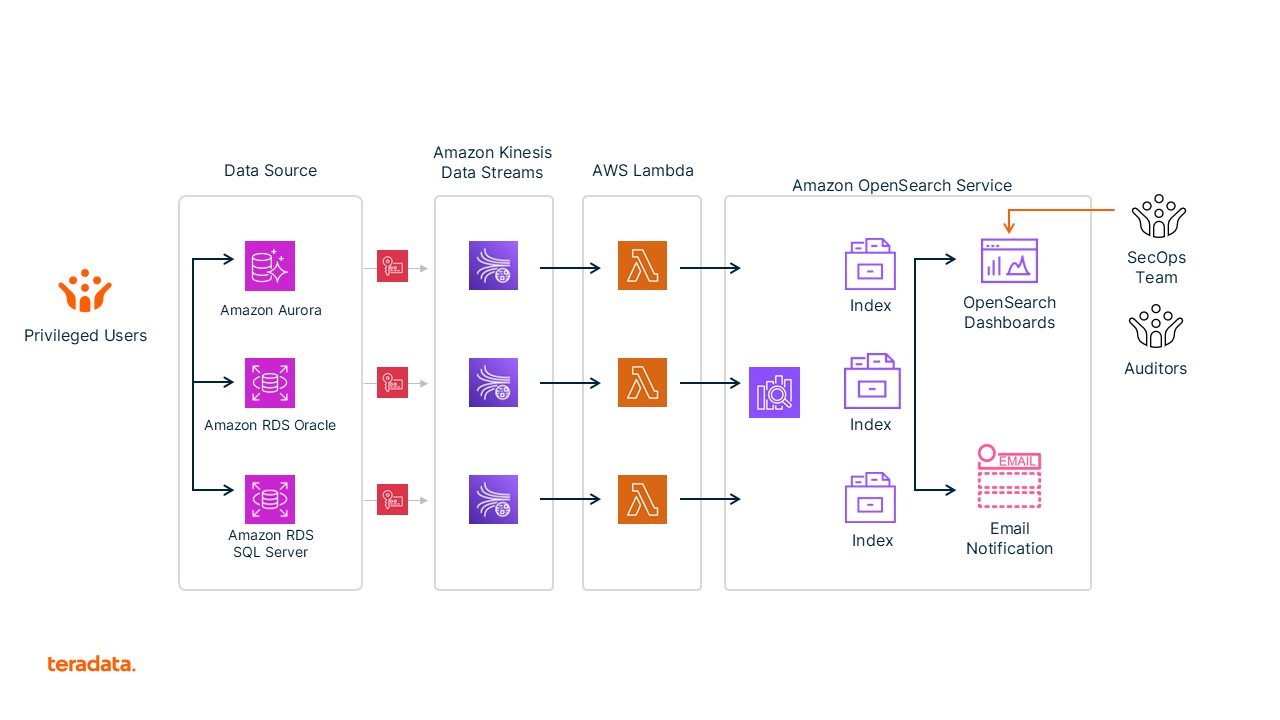
Source: https://aws.amazon.com/blogs/database/privileged-database-user-activity-monitoring-using-database-activity-streamsdas-and-amazon-opensearch-service/
Why does DAM matter in 2026?
Regulatory pressure is intensifying
New and expanding regulations (SEC cyber rules, evolving state privacy laws, global data residency mandates) require organizations to prove:
- Who accessed sensitive data
- When they accessed it
- What they did with it
Insider risk is now a top breach vector
External attacks are still common—but insider misuse (privileged users, contractors, compromised credentials) is one of the fastest-growing threats. DAM provides:
- Real-time monitoring of privileged access
- Detection of anomalous query patterns
- Alerts for unusual bulk data extraction
AI and advanced analytics increase exposure
As companies scale AI and machine learning initiatives:
- More users gain access to large datasets
- More automation interacts directly with production data
- Data pipelines become more complex
Board-level accountability for data risk
Cybersecurity is now a board KPI. Executives must demonstrate:
- Continuous monitoring
- Breach detection capability
- Control over sensitive datasets
DAM supports executive reporting and risk dashboards—not just technical security teams.
Benefits of database activity monitoring
DAM delivers several concrete security and operational benefits when implemented effectively.
The implementation of database activity monitoring brings a multitude of benefits to organizations, paramount among them being a significant enhancement in data security. By providing real-time visibility into all database activity, DAM enables organizations to detect and respond to potential threats and vulnerabilities swiftly, thereby reducing the risk of data breaches.
Compliance is another critical area where DAM offers substantial advantages. With various regulations requiring strict control and auditing of access to sensitive data, DAM systems facilitate compliance by automatically tracking and documenting all database activities, making it easier to demonstrate adherence to regulatory standards. Moreover, DAM aids in incident response by quickly identifying the source and scope of a security incident, enabling faster remediation. Lastly, insights into data usage patterns gleaned from DAM can help organizations optimize their database performance and make informed decisions regarding data management policies and practices.
Database activity monitoring tools and software
Modern DAM tools are built to integrate with the rest of an enterprise's security stack, not replace it.
The technological landscape of database activity monitoring is rich and varied, comprising software solutions that seamlessly integrate with existing database and security infrastructures. These DAM solutions are designed to be compatible with a wide range of database management systems, including Microsoft SQL Server, Oracle Database, and cloud-based databases—ensuring comprehensive monitoring regardless of the database environment.
Advanced features such as machine learning algorithms for anomaly detection, automated alerting systems, and customizable reporting capabilities are common among leading DAM software, enhancing their effectiveness in monitoring and protecting sensitive data.
Furthermore, many DAM solutions offer integration with other security tools, such as database firewalls and data loss prevention systems, creating a robust security posture that shields organizations from a wide array of threats. Through the deployment of these advanced technologies, DAM provides a critical layer of security that supports the overall data protection strategy of an organization.
Challenges of DAM implementation
DAM is powerful, but it comes with real implementation trade-offs that organizations need to plan for.
Implementing database activity monitoring is not without its challenges. One of the primary concerns is the potential impact on database performance. Monitoring and logging a high volume of database activity can consume significant system resources, potentially leading to decreased performance. Managing the sheer volume of data generated by DAM can also be daunting, as it requires sophisticated analysis tools and storage solutions to handle the influx of data effectively.
Additionally, privacy concerns arise when monitoring user activity, especially in environments that handle personal information. Organizations must carefully balance the need for security with the requirement to protect individual privacy, ensuring that monitoring practices comply with legal and ethical standards.
Encrypted traffic and cloud-managed databases add further complexity. Traditional DAM approaches can't inspect TLS-encrypted connections without access to decryption keys, and managed cloud services like Amazon RDS or Snowflake don't allow agents to be installed on the database host. These constraints are driving the shift from legacy agent-based DAM toward agentless, cloud-native approaches—covered in the next section.
Database activity monitoring best practices
To overcome the challenges associated with database activity monitoring and maximize its benefits, organizations should adhere to a set of best practices.
Developing and implementing comprehensive DAM policies is crucial. These policies should define what activities are monitored, how data is analyzed and stored, and who has access to the monitoring data. Regular updates and maintenance of the DAM system are also essential to ensure that it remains effective against evolving threats and compatible with new database technologies.
Additionally, training staff on the importance of data security and the role of DAM in protecting sensitive information is vital. Employees should be made aware of the organization's data security policies, including the use of DAM, to foster a culture of security awareness. By following these best practices, organizations can effectively navigate the challenges of DAM and leverage its full potential to secure their database environments.
Legacy vs. next-gen DAM: What's the difference?
For most of DAM's history, implementation meant installing agents on every database server and routing all activity through appliances managed by specialist teams. That model made sense when database estates were small, on-premises, and static. It doesn't fit modern environments where databases are cloud-managed, distributed across multiple providers, and accessed by AI agents and automated pipelines alongside human users.
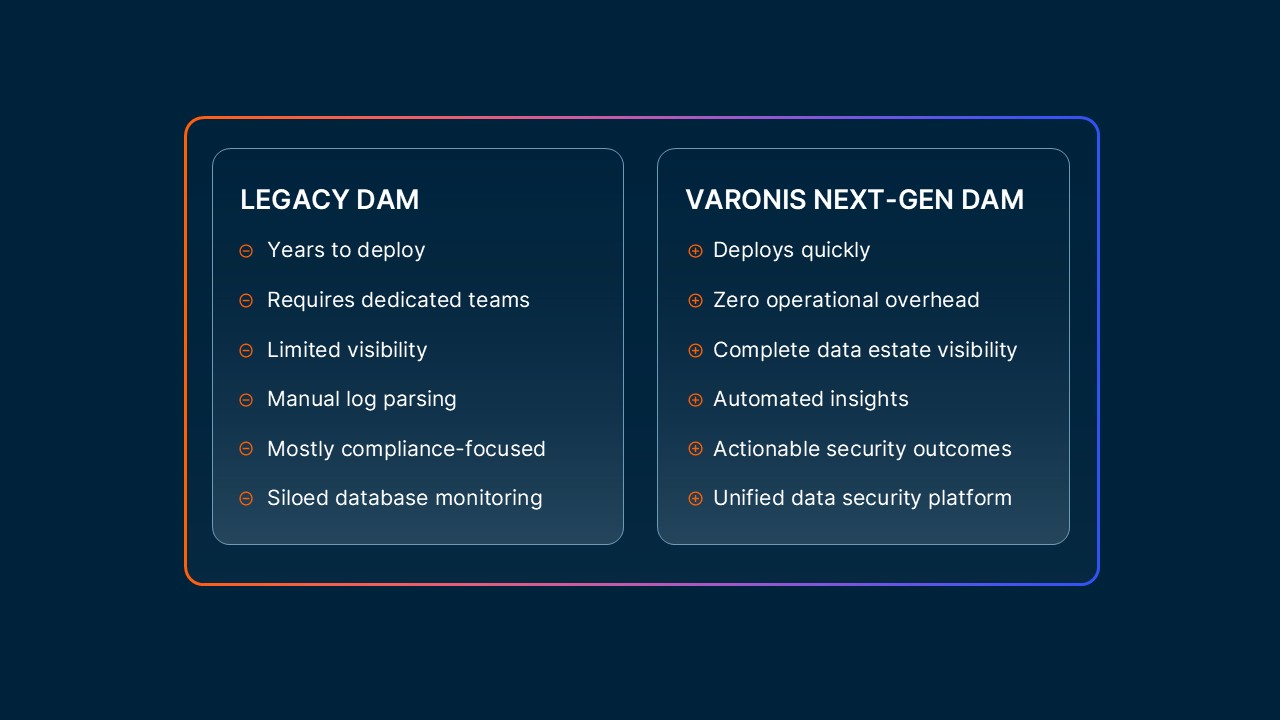 Source: https://www.somerfordassociates.com/blog/what-is-database-activity-monitoring-dam/
When legacy agent-based DAM still fits
Legacy DAM remains a reasonable choice for mature on-prem estates with stable database footprints, deep compliance requirements on specific platforms (particularly Oracle or IBM Db2), and security teams with existing agent-management expertise.
When next-gen or agentless DAM is the better choice
Next-gen DAM is the better fit for hybrid and multi-cloud estates, environments with frequent infrastructure change, organizations scaling AI/ML workloads against governed data, and teams that need to deploy in weeks rather than months.
Secure your data. Build trust.
Modern business is deeply interconnected, creating both opportunities and risks. Teradata safeguards data with best-in-class technologies and processes, earning the trust of leading enterprises from the world's most highly regulated industries. To learn more about how Teradata delivers trusted data for business, visit our Trust and Security Center.
DAM FAQs
Still have questions about DAM? Here are answers to some of the most common.
What does database activity monitoring do?
What does database activity monitoring do?
DAM captures, analyzes, and alerts on activity happening inside database systems — tracking who accessed what data, when, and how, independently of the database's own logs.
What is the purpose of database monitoring?
What is the purpose of database monitoring?
The purpose is to protect sensitive data from unauthorized access, meet regulatory compliance requirements, and give security teams forensic evidence they can trust.
What is the difference between DAM and DAP?
What is the difference between DAM and DAP?
DAP is Gartner's term for the broader category DAM has evolved into, which adds capabilities like data discovery and classification, vulnerability management, and activity blocking on top of core monitoring.
What is next-gen or agentless DAM?
What is next-gen or agentless DAM?
Next-gen DAM uses cloud-native, agentless interception or native log collection instead of per-server agents. It deploys faster, scales across thousands of databases, and works with managed cloud services that legacy DAM cannot reach.
How does DAM support compliance with SOX, HIPAA, PCI DSS, and GDPR?
How does DAM support compliance with SOX, HIPAA, PCI DSS, and GDPR?
DAM provides the continuous monitoring, tamper-proof audit trails, and privileged-access reporting these frameworks require — turning compliance evidence into something retrievable on demand rather than reconstructed manually.